Showing posts with label World. Show all posts

Religious leaders hit back at Hawking

London, England (CNN) -- Religious leaders in Britain on Friday hit back at claims by leading physicist Stephen Hawking that God had no role in the creation of the universe.

In his new book "The Grand Design," Britain's most famous scientist says that given the existence of gravity, "the universe can and will create itself from nothing," according to an excerpt published in The Times of London.

"Spontaneous creation is the reason why there is something rather than nothing, why the universe exists, why we exist," he wrote.

"It is not necessary to invoke God to light the blue touch paper [fuse] and set the universe going."

But the head of the Church of England, the Archbishop of Canterbury Dr. Rowan Williams, told the Times that "physics on its own will not settle the question of why there is something rather than nothing."

He added: "Belief in God is not about plugging a gap in explaining how one thing relates to another within the Universe. It is the belief that there is an intelligent, living agent on whose activity everything ultimately depends for its existence."

Williams' comments were supported by leaders from across the religious spectrum in Britain. Writing in the Times, Chief Rabbi Jonathan Sacks said: "Science is about explanation. Religion is about interpretation ... The Bible simply isn't interested in how the Universe came into being."

The Archbishop of Westminster Vincent Nichols, leader of the Roman Catholic Church in England and Wales, added: "I would totally endorse what the Chief Rabbi said so eloquently about the relationship between religion and science."

Ibrahim Mogra, an imam and committee chairman at the Muslim Council of Britain, was also quoted by the Times as saying: "If we look at the Universe and all that has been created, it indicates that somebody has been here to bring it into existence. That somebody is the almighty conqueror."

Hawking was also accused of "missing the point" by colleagues at the University of Cambridge in England.

"The 'god' that Stephen Hawking is trying to debunk is not the creator God of the Abrahamic faiths who really is the ultimate explanation for why there is something rather than nothing," said Denis Alexander, director of The Faraday Institute for Science and Religion.

"Hawking's god is a god-of-the-gaps used to plug present gaps in our scientific knowledge.

"Science provides us with a wonderful narrative as to how [existence] may happen, but theology addresses the meaning of the narrative," he added.

Fraser Watts, an Anglican priest and Cambridge expert in the history of science, said that it's not the existence of the universe that proves the existence of God.

"A creator God provides a reasonable and credible explanation of why there is a universe, and ... it is somewhat more likely that there is a God than that there is not. That view is not undermined by what Hawking has said."

Hawking's book -- as the title suggests -- is an attempt to answer "the Ultimate Question of Life, the Universe, and Everything," he wrote, quoting Douglas Adams' cult science fiction romp, "The Hitch-hiker's Guide to the Galaxy."

His answer is "M-theory," which, he says, posits 11 space-time dimensions, "vibrating strings, ... point particles, two-dimensional membranes, three-dimensional blobs and other objects that are more difficult to picture and occupy even more dimensions of space."

He doesn't explain much of that in the excerpt, which is the introduction to the book.

But he says he understands the feeling of the great English scientist Isaac Newton that God did "create" and "conserve" order in the universe.

It was the discovery of other solar systems outside our own in 1992 that undercut a key idea of Newton's -- that our world was so uniquely designed to be comfortable for human life that some divine creator must have been responsible.

But, Hawking argues, if there are untold numbers of planets in the galaxy, it's less remarkable that there's one with conditions for human life. And, indeed, he argues, any form of intelligent life that evolves anywhere will automatically find that it lives somewhere suitable for it.

CNN's Richard Allen Greene contributed to this report.
Read More

Hunt for Jamaican drug suspect to resume


Security forces in Jamaica plan to renew a push Monday to arrest an accused drug lord at the center of violence that has now killed 76 people, the country's police commissioner said.

CNN

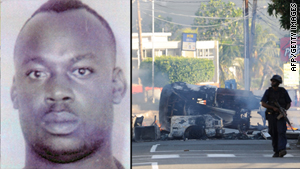
Police officers and soldiers plan to launch the second phase of an operation Monday aimed at executing an arrest warrant for Christopher "Dudus" Coke, a suspected drug kingpin who is wanted in the United States, police commissioner Owen Ellington said.

The death toll has risen to 76 as a result of violence triggered by Jamaican authorities' attempts to arrest Coke, Ellington said. The dead include 73 civilians, two police officers and one soldier, he said.

Authorities have detained more than 700 people, he said.

Clashes have unnerved residents in the Kingston neighborhoods of Tivoli Gardens and Denham Town.

Violence flared there after authorities tried to arrest Coke, who was charged last year in U.S. federal court with conspiracy to distribute marijuana and cocaine and with conspiracy to illegally traffic in firearms. Authorities in Jamaica sought to arrest him after federal prosecutors in New York sought his extradition, but his supporters attacked police stations in response.

Coke has a heroic reputation in Kingston's slums. He has been likened to Robin Hood and Jesus because he has helped the community by handing out food, sending children to school and building medical centers.

The plans for a new push to arrest Coke unfolded amid credible evidence that criminals from around the country have converged on Tivoli Gardens to help him avoid arrest, Ellington said in a press briefing with reporters.

At that briefing, Ellington reiterated government denials that members of the security forces have burned bodies. Some people in Tivoli Gardens told CNN this week that they saw security forces torch dead people and that they feared the authorities were burning bodies to cover up the extent of the violence.

"I literally saw them wrap up men in sheets and put tires on them and burn them," one man said, adding that the people were already dead when their bodies were burned.

He and others who described burning bodies declined to be identified for fear of reprisals from the authorities.

Reports that authorities have burned or secretly buried bodies are false, Ellington said. Several senior officials who investigated the reports found no sign that they were true, he said.

The violence that gripped much of Kingston for much of the last week seemed to have largely abated Friday. Charred debris, broken windows and deserted streets served as a reminder of an anxiety still felt by some, but businesses in Kingston's main commercial district were open, and officials expressed hope for a sense of normalcy.

The president of Jamaica's Chamber of Commerce, Milton Samuda, said more businesses reopened Friday.

"I anticipate and hope that it will be fully back to normal by Monday," he said.

Read More

BBC News:Alastair Campbell defends 'every word' of Iraq dossier

Tony Blair's ex-spokesman Alastair Campbell has said he "defends every single word" of the 2002 dossier on Iraq's weapons of mass destruction.

He told the UK's Iraq war inquiry that parts could have been "clearer" but it did not "misrepresent" Iraq's threat.

The UK should be "proud" of its role "in changing Iraq from what it was to what it is now becoming", he argued.

But he said Mr Blair told President Bush privately in 2002 the UK would back military action if necessary.

Critics of the war have called for private correspondence between the two leaders about their views on Iraq to be published.

Countdown to war

Mr Campbell is the most prominent figure to appear so far before the inquiry, which is looking at UK policy before and after the 2003 war.

The BBC's Security Correspondent Frank Gardner said he had given a defiant performance, showing no contrition over the controversial decision to go to war or the arguments used to justify the action.

Mr Campbell said the prime minister recognised the deep opposition to military action amongst much of the British public but believed there would be a "bigger day of reckoning" to come with Saddam if he was not confronted at the time.

As No 10 director of communications between 1997 and 2003, he played a key role in the drawing-up of the government's September 2002 dossier on Iraq's alleged weapons of mass destruction, containing the controversial claim that they could be deployed within 45 minutes.

"Could things have been done differently, almost certainly," he said of the March 2003 invasion.

"Any decision, you can go back over it, but on the big picture, on the leadership that he [Tony Blair ] showed, on the leadership that the British government showed on this issue, I was privileged to be there and I'm very very proud of the part that I was able to play."

He added: "I think that Britain, far from beating ourselves up about this, should be really proud of the role that we played in changing Iraq from what it was to what it is now becoming."

Mr Campbell said he was "very close" to the prime minister but stressed that Mr Blair fully consulted other key ministers on Iraq policy - including the then Chancellor Gordon Brown.

Mr Campbell, who has given evidence to three previous inquiries on Iraq, said claims that Mr Blair endorsed regime change after a meeting with President Bush at his Crawford ranch in April 2002 were not true.

British policy was still focused on disarming Iraq and getting it to abide by UN resolutions, he argued, as Mr Blair "genuinely believed" Iraq's pursuit of weapons of mass destruction must be dealt with.

Mr Blair was clear that military action should be regarded as a last resort if the diplomatic process failed and still hoped that the issue could be "peacefully resolved" right up to the eve of war.

"You seem to be wanting me to say that Tony Blair signed up to saying, regardless of the facts and WMD, we are going to get rid of this guy," he said. "It was not like this."

But he revealed that Mr Blair had written to President Bush during 2002 about the disarmament strategy, saying: "If that cannot be done diplomatically and it is to be done militarily, Britain will be there. That would be the tenor of the communication to the president."

The Lib Dems, who opposed the invasion, have called for the letters to be published, saying Mr Campbell's evidence cast further doubt on the legality of the war.

Former Conservative Foreign Secretary Sir Malcolm Rifkind, who opposed the invasion, said the letters would show the extent to which Tony Blair and George Bush were "hand in glove" over the issue and should be available to the public.

Asked about weapons of mass destruction, Mr Campbell said Tony Blair believed Iraq posed a "unique threat" because Saddam Hussein had used them before and there was no means of dialogue with him.

Mr Campbell said he had provided "presentational" support on the key September 2002 dossier but, at no stage, did No 10 try to "beef up or over-ride" the judgements of the intelligence agencies.

Describing it as a "cautious" assessment, he insisted it had not been designed to present the "case for war" but to highlight why Mr Blair was increasingly "concerned" about the threat posed by Iraq.

"I don't believe the dossier in any sense misrepresented the position."

The dossier included a foreword by Mr Blair in which he wrote that he believed the intelligence had established "beyond doubt" that Saddam Hussein had continued to produce chemical and biological weapons.

Sir John Scarlett, chairman of the Joint Intelligence Committee, told the inquiry last month that the foreword was "overtly political" and "quite separate" from the rest of the dossier.

45-minute claim

Mr Campbell, who drafted the first version of the foreword - ultimately approved by Mr Blair - said no-one in intelligence challenged this statement which, he added, never suggested Saddam Hussein "was able to do something terrible to the British mainland".

On the 45-minute claim, which was retracted after the war, he said the dossier "obviously" could have been clearer about it referring to battlefield munitions.

But he insisted Mr Blair put forward a balanced argument in the House of Commons on the issue and the 45-minute claim was only given "iconic" status by the press.


Questions about Mr Campbell's role in the dossier were at the centre of a post-war row with the BBC culminating in the death of the government weapons expert Dr David Kelly and the subsequent Hutton inquiry.

Mr Campbell said he was "never in doubt" that Iraq would be found to have weapons of mass destruction and the realisation that they did not was "very difficult".

On the invasion's aftermath, he said it became clear within a week that things were not going well and there was a lack of "grip".

He argued that Secretary of State for International Development Clare Short, who resigned shortly after the invasion in protest about post-war strategy, was "difficult to handle" and suggested there was a fear she might leak things she did not agree with.

Former Defence Secretary Geoff Hoon and former Foreign Secretary Jack Straw will give evidence to the inquiry next week with Mr Blair expected to appear at a later date.

His successor as prime minister, Gordon Brown, will not give evidence until after the general election, expected to take place in May.

The SNP have called for Mr Brown to give evidence before the election as it was he, as chancellor, who "bankrolled" the military campaign.

The Iraq Inquiry's final report is due to be published by early next year.

Read More

Revealed: Height of World's Tallest Building


The world's tallest building has opened in Dubai as the official height was revealed - 828 metres (2717ft).

Adam Arnold, Sky News Online

The world's tallest building has opened in Dubai as the official height was revealed - 828 metres (2717ft).

In a surprise move, the Burj Dubai was renamed Burj Khalifa by Dubai's ruler Sheikh Mohammed bin Rashid al-Maktoum.

The new name is after Sheikh Khalifa bin Zayed Al Nahyan - the president of the United Arab Emirates and the ruler of the neighbouring emirate of Abu Dhabi.

The Burj Khalifa towers over its nearest rival, the Taipei 101 in Taiwan, which rises 508m (1,667ft).

That makes it about twice the height of the Empire State Building.

At the opening ceremony, thousands of residents and tourists crowded around the base of the half-mile tall tower, which is at least 160 storeys high.

Dubai's ruler unveiled a plaque, kicking off inaugural festivities.

They included traditional Gulf Arab dance performances and skydivers with parachutes emblazoned with the colours of the UAE flag.

The top of the building can be seen from 60 miles away and the exterior is covered in about 26,000 glass panels.

The building boasts the most storeys and highest occupied floor of any building in the world, and ranks as the world's tallest structure, beating a television mast in North Dakota.

"We weren't sure how high we could go," said Bill Baker, the building's structural engineer, who is in Dubai for the inauguration. "It was kind of an exploration ... a learning experience."


Revealed: Height of World's Tallest Building

7:41pm UK, Monday January 04, 2010

Adam Arnold, Sky News Online
The world's tallest building has opened in Dubai as the official height was revealed - 828 metres (2717ft).

In a surprise move, the Burj Dubai was renamed Burj Khalifa by Dubai's ruler Sheikh Mohammed bin Rashid al-Maktoum.

The new name is after Sheikh Khalifa bin Zayed Al Nahyan - the president of the United Arab Emirates and the ruler of the neighbouring emirate of Abu Dhabi.

The Burj Khalifa towers over its nearest rival, the Taipei 101 in Taiwan, which rises 508m (1,667ft).

That makes it about twice the height of the Empire State Building.

At the opening ceremony, thousands of residents and tourists crowded around the base of the half-mile tall tower, which is at least 160 storeys high.

Dubai's ruler unveiled a plaque, kicking off inaugural festivities.

They included traditional Gulf Arab dance performances and skydivers with parachutes emblazoned with the colours of the UAE flag.

HOW THE BURJ COMPARES TO WORLD RIVALS

The top of the building can be seen from 60 miles away and the exterior is covered in about 26,000 glass panels.

The building boasts the most storeys and highest occupied floor of any building in the world, and ranks as the world's tallest structure, beating a television mast in North Dakota.

"We weren't sure how high we could go," said Bill Baker, the building's structural engineer, who is in Dubai for the inauguration. "It was kind of an exploration ... a learning experience."


The Burj's opening comes at a tough time for Dubai's economy with property prices in newer parts of the sheikhdom down by nearly half over the past year.

The city-state turned to its richer neighbour Abu Dhabi for a series of bailouts in 2009 to help cover debts amassed by a network of state-linked companies.
Read More

New Year's revelers have a blast

CNN-The New Year got under way with blasting horns and fireworks shot from the Sky Tower as revelers partied Friday morning in Auckland, New Zealand.

Similar celebrations were moving like a wave from east to west as midnight struck across the globe, starting at the International Date Line in the mid-Pacific Ocean.

Throngs danced to pounding rock 'n' roll music and cheered a spectacular 12-minute fireworks display over the picturesque Sydney Harbour Bridge in Australia. A giant bell was rung before a huge crowd in Seoul, South Korea.

In New York, security promised to be tight for Thursday night's traditional celebration in Times Square. After the Christmas Day attempt to blow up a Northwest Airlines plane over Detroit, Michigan, security forces are on high alert.

"We want people to have a happy experience. But we are also concerned about a terrorist event. We have to do that after 9/11," New York Police Commissioner Ray Kelly said.

As happens every year, police are searching garages and subway tunnels for bombs, trash cans are being removed, and mailboxes and manhole covers are being sealed. Detectives were asking hotel and restaurant personnel if they had noticed any suspicious people or activity, and radiation detectors and bomb-sniffing dogs were being deployed.

Snow was falling on the square Thursday morning.

See images from Times Square

On Wednesday, a search of a suspicious van led to a partial evacuation of Times Square and the Nasdaq building, but the van turned out to pose no threat.

In the years before terrorism was a concern inside the United States, the Times Square celebration was a rowdy affair, fueled by copious amounts of alcohol, often transported via backpack. Today, alcohol and backpacks are banned from the area on New Year's Eve, and revelers are herded into 2,500-person pens, but the mood is festive nonetheless.

New Yorker Julio Ortiz-Teissonniere, a CNN iReporter, said he's too jaded to take part in the spectacle, but that wasn't always the case.

"When the ball drops, it's like an earthquake," he said. "The amount of people screaming and stomping -- it's amazing."

It's a tense time for police.

"When the ball drops, you get a feeling of relief that you made it through another year," Kelly said.

Read More

Missing ship 'found' off Africa


A missing merchant ship with 15 Russian crew members on board has been spotted off the coast of West Africa, unconfirmed reports say.

The Arctic Sea had last been sighted in the Bay of Biscay on 30 July.

Reports citing coastguards suggested it had been seen some 400 nautical miles north of the Cape Verde islands.

However amid continuing uncertainty, a Russian official was later quoted in Russian media as saying "this information did not prove to be true".

Russian navy ships have been searching for the 4,000-tonne Maltese-flagged vessel, which had been carrying timber.

Observers have suggested the ship was hijacked, possibly because of a Russian commercial dispute.

Following the reported sighting, a spokesman for the French defence ministry told the BBC that the Arctic Sea was thought to be in international waters.

The spokesman said his information came from the Cape Verde coastguard, who said the ship was outside its jurisdiction.

However, the spokesman said there was a "high possibility" that the ship had been located. French intelligence officials also believe they have found the ship in the same area, he said.

The Russian ambassador to Cape Verde, Alexander Karpushin, told Associated Press news agency that a Russian frigate was heading to the area but had no information on the Arctic Sea's location.

However, Russia's RIA news agency later quoted Mr Karpushin as saying the information that the Arctic Sea was spotted "400 nautical miles north of the island of Santo Antao... did not prove to be true".

He cited a meeting with the head of Cape Verde's armed forces.

Five Russian warships and other vessels have been searching the Atlantic for the vessel.

Attack reports

Carrying timber reportedly worth $1.8m (£1.1m), the Arctic Sea sailed from Finland and had been scheduled to dock in the Algerian port of Bejaia on 4 August.

The crew reported being boarded by up to 10 armed men as the ship sailed through the Baltic Sea on 24 July, but the intruders were reported to have left the vessel on an inflatable boat after 12 hours.

There are also reports of the ship being attacked a second time off the Portuguese coast. However the ship's operators said they had no knowledge of the incident and Portugal said the ship was never in its territorial waters.

The last known contact with the crew was when the Arctic Sea reported to British maritime authorities as it passed through the Dover Strait.

On Friday, the European Union Commission spokesman Martin Selmayr said: "From information currently available it would seem that these acts, such as they have been reported, have nothing in common with 'traditional' acts of piracy or armed robbery at sea."

Nato was monitoring the situation due to the unusual nature and location of the attacks, but was not directly involved in the search.

Read More

Ousted president vows to return to Honduras


(CNN) A new standoff was brewing in Honduras as the country's recently deposed president vowed to return, while the new provisional government said it would arrest him if he set foot back in the country.

Political turmoil has swept this Central American nation of 8 million people following a military-led coup Sunday that ousted President Jose Manuel Zelaya. Troops entered the president's residence and sent him out of the country in exile. A veteran legislator, Roberto Micheletti, was sworn in that same day as provisional president with the support of congress.

Roberto Micheletti, the veteran legislator who was sworn in that same day as provisional president with the support of congress, was adamant that Zelaya would not return to power.

"He already committed crimes against the constitution and the laws; he can't return to be president of the republic," Micheletti told reporters Tuesday. "He can no longer return to the presidency unless a president from another Latin American country comes and imposes him with arms."

Micheletti added, "If there is an invasion against our country, we have 7½ million Hondurans ready to defend our territory and our laws and our homeland and our government."

However, Zelaya still vows to defy the provisional government.

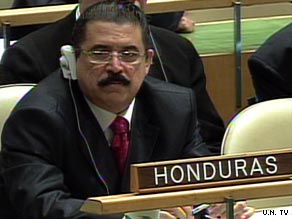
"I am going to return on Thursday because they expelled me by force, and I am going to return as always: as a citizen and as president," Zelaya said at a U.N. news conference shortly after the world body unanimously adopted a resolution that he should be restored to power.

Zelaya, speaking to the U.N. General Assembly, called the resolution historic.

"Your servant has several accusations against him in Honduras," Zelaya said. "But nobody has given me a trial. Nobody has convened a tribunal."

Meanwhile, Micheletti's provisional government said Zelaya would be arrested if he returned.

"As soon as he arrives he will be captured, as we already have the arrest warrants ready," new Foreign Minister Enrique Ortez Colindres told CNN en Español.

Zelaya would face charges of violating the constitution, corruption and drug trafficking, among others, Ortez said.

The deposed president said he would travel to Washington to attend a meeting of the Organization of American States. He also is expected to meet Tuesday evening with Tom Shannon, the top U.S. official on Latin America.

Even as Zelaya spoke at the United Nations, his opponents held a large and noisy rally in Tegucigalpa, the capital of Honduras. Crowd members waved blue and white Honduran flags and signs denouncing Zelaya.

Roberto Micheletti, the new provisional president, briefly addressed the crowd Tuesday afternoon. He vowed that the next national elections, slated for November, will be held as planned, and that a new president will be sworn in as usual in January.

Gen. Romeo Vasquez Velasquez, the top Honduran military commander who had butted heads with Zelaya, also spoke at the rally. By removing Zelaya, the armed forces were only complying with their constitutional duties, he said.

Before he spoke, the crowd chanted in support, "Armed forces! Armed forces!"

Zelaya supporters also were active Tuesday, with three major public-sector labor unions launching a general strike, a union official told CNN. About 100,000 workers joined the strike, said Oscar Garcia, vice president of the Honduran water workers union SANAA. That number could not be independently verified.

"It will be an indefinite strike," Garcia said. "We don't recognize this new government imposed by the oligarchy, and we will mount our campaign of resistance until President Manuel Zelaya is restored to power."

Also on Tuesday, the U.S. State Department said it was reviewing its aid to Honduras as it works with regional partners on a deal to restore Zelaya to power and quell political unrest in the country.

Department spokesman Ian Kelly said the U.S. was reviewing whether Zelaya's ouster met the legal definition of a "coup" before any decision was made.

"Because of the situation and the very dramatic nature of the events there and our profound concern about what's going on there, I think we're looking at a number of aspects of our cooperation," Kelly said.

The State Department has also issued a travel alert due "to the current unstable political and security situation in Honduras." The alert "recommends that American citizens defer all nonessential travel to Honduras until further notice."

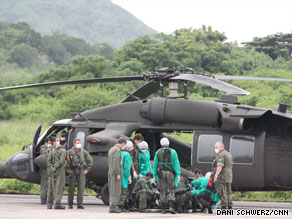
In another development, two U.S. military officials in Washington confirmed to CNN that U.S. helicopters will fly over southern Honduras on a humanitarian relief mission Tuesday. The officials said there is great sensitivity to any public appearance by the U.S. military in the country.

The U.S. military also postponed some planned exercises with the Honduran military until the situation in the country settles down, according to the U.S. Southern Command.

"We have postponed certain activities," Maj. D.L. Wright, Southern Command spokesman, told CNN.

Wright said this decision would be in effect for at least two to three weeks, or "until the political situation settles."

Zelaya was overthrown early Sunday when the Honduran military arrested him and flew him to Costa Rica. Micheletti, president of the Congress, was sworn in as provisional president later Sunday.

The United Nations, OAS and most nations in the Western Hemisphere, including the United States, have condemned the ouster and demanded that Zelaya be restored to power.

The World Bank said Tuesday it would freeze funds to Honduras until the crisis is resolved, and the United States said it is reviewing its aid to the Central American nation. The U.S. joined many other nations in co-sponsoring Tuesday's U.N. resolution.

Zelaya had been at odds with the other branches of government over a referendum he wanted to hold Sunday. The Honduran Supreme Court had ruled that the referendum was illegal, and Congress had voted not to hold it.

The high court also had overturned Zelaya's dismissal of Honduras' top general, who said the military would not participate in the referendum. The court ordered that the general be reinstated immediately.

Zelaya disregarded those actions and vowed to hold the vote anyway. Micheletti also told Honduras' representatives at the United Nations and OAS to quit speaking against the new government or they immediately will be removed from their posts. They are not authorized, he said, to speak for the Honduran government.

In another development, two U.S. military officials in Washington confirmed to CNN that American helicopters will fly over southern Honduras on a humanitarian relief mission Tuesday. The officials said there is great sensitivity to any public appearance by the U.S. military in the country.

Three Black Hawk helicopters are scheduled to leave an air base at Soto Cano in Honduras and fly south to Nicaragua. They will be used to support the USNS Comfort, which is conducting a medical relief mission.
Read More

Air crash bodies heading to DNA lab


The first bodies to be recovered from the crash of Air France 447 are due to arrive at a Brazilian Air Force base in Recife, Brazil, Wednesday afternoon local time, the air force announced.

The 16 bodies are expected to be sent on for identification to the Legal Medical Institute, the statement said. Police will perform DNA tests at their lab in the capital, Brasilia, they said.

Another 25 bodies have been found and will go through the same procedure starting Thursday, the air force said.

A French nuclear submarine joined the hunt Wednesday for the "black box" flight data recorder and other wreckage of Air France Flight 447 as Brazilian air force and navy crews continued to pull bodies from the Atlantic.

France is leading the investigation into what caused last week's accident when the Paris-bound flight from Rio de Janeiro plunged into the sea off the Brazilian coast with 228 passengers and crew on board.

The French nuclear submarine Emeraude began patrolling the area Wednesday morning, the French defense ministry said.

Around 400 French military personnel are involved in the salvage effort. France has also sent two tugs towing 40 tons of recovery equipment, a surveillance ship and a ship equipped for amphibious operations.

Fourteen aircraft -- 12 Brazilian and two French -- are participating, along with five Brazilian ships. The U.S. Navy will contribute two high-tech acoustic devices to listen underwater for the emergency beacons that are attached to the voice and data recorders.

The "towed pinger locators," which help search for emergency beacons on downed aircraft to a maximum depth of 6,000 meters (20,000 feet) -- will be placed aboard the French tugs.Video Brazilian officials emphasized earlier this week that finding bodies was their main priority. The French are in charge of finding the voice and data recorders.

The 16 bodies retrieved Tuesday from the Atlantic were taken to the island of Fernando de Noronha for transport by helicopter to Recife. The 25 bodies previously found were put aboard a Brazilian frigate.

The first bodies were recovered about 320 kilometers (200 miles) northwest of the Brazilian archipelago of Saint Peter and Saint Paul; Tuesday's recoveries were 80 kilometers (50 miles) away.

It was not clear whether the bodies had drifted in the 1-2 knot currents or whether their separation suggested that the jet may have broken apart in the air.The location of the crash has not been determined, because ocean currents have moved the bodies and debris. The search area covers 200,000 square km (77,220 square miles), Brazilian officials said.

The ocean depth where the debris and bodies have been found varies, but averages about 3,000 meters (nearly 9,900 feet) deep, according to the University of New Hampshire/National Oceanic and Atmospheric Association Joint Hydrographic Center.

Brazilian officials said the plane debris will be taken to France for investigation but the bodies would undergo forensic tests in Recife.

The cause of the crash is still not known, but investigators are looking at the possible role of airspeed sensors known as Pitot tubes, among other factors. Air France has agreed to replace the sensors on its Airbus A330 and A340 jets, a pilots' union said Tuesday.

The airline said Saturday that it began replacing its fleet's sensors last month.

Another Air France pilots' union, ALTER, has advised its pilots not to fly planes until their Pitot tubes are replaced. ALTER, the smallest of three Air France pilots' unions, would not say what percentage of the carrier's pilots it represents.

The biggest union, SNPL, said Tuesday it has accepted Air France's assurances that no Airbus A330 or A340 will take off unless at least two of its three Pitot tubes have been replaced.

Union spokesman Eric Derivry added that there is no indication that the Pitot tubes caused the accident.

Air France said over the weekend that it began to notice in May of last year that Pitot tubes sometimes briefly iced up at high altitude on A330s and A340s. That caused "a loss of airspeed data," according to the airline -- that is, the pilots didn't know the plane's speed.

Air France decided to replace all its probes starting April 27, following laboratory tests earlier in the year, the airline said.
Read More

Indian prime minister looks set for second term


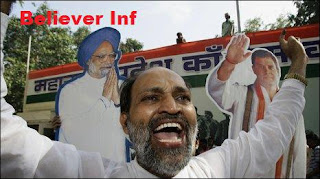
NEW DELHI, India (CNN/Believer Inf) Indian Prime Minister Manmohan Singh appeared set for a second term as his Congress party and its allies scored a decisive lead over their opponents on Saturday in a vote count after the country's monthlong general elections.

The Congress-led United Progressive Alliance surged ahead in more than 255 of the 543 federal parliamentary boroughs, outpacing the main opposition composed of a grouping led by the Hindu nationalist Bharatiya Janata party (BJP).

BJP leader Arun Jaitley conceded defeat, stating that the ruling party will win the election.

"We respect this mandate and accept it," Jaitley said.

India's communists, who last year parted ways with the federal government for its civilian nuclear cooperation agreement with the United States, also suffered a massive blow in their stronghold state of West Bengal as they trailed their rivals in more than half of its boroughs.

Singh drove down to the home of Sonia Gandhi, the Italian-born head of the Congress party, after trends gave out a clear mandate in favor of the ruling coalition.

Standing beside Gandhi, who once again endorsed the choice of Singh for her party's top job, he thanked voters for their support.

He vowed to maintain a stable government that he said would remain committed to secular values. Singh also remarked that he would like Rahul Gandhi, son of his party chief, to become a member of his new Cabinet.

Deepak Sandhu, the prime minister's spokeswoman, told Believer Infthat Singh is expected to hold a meeting of his current Cabinet on Monday.

The prime minister, whose coalition may need some extra backing to be able to reclaim power with a majority of 272 lawmakers on its side, threw up an invitation to all secular parties to come and support his government.

The fifth and final phase of India's marathon general election to choose a federal government ended Wednesday.

Most of the results of the will be out by the end of the day, election officials said.

India is home to about 714 million voters. About 100 million voters registered for Wednesday's polling.
Read More

Obama hails unity over al-Qaeda

US President Barack Obama has said after meeting his Afghan and Pakistani counterparts that they are united in the goal of defeating al-Qaeda.

Da BBC

Speaking in Washington, Mr Obama said the goal was to "disrupt, dismantle and defeat al-Qaeda" and its allies.

He also pledged greater resources to help civilians in both countries and try to avoid civilian casualties.

Dozens of civilians are thought to have died in US air strikes on Taleban targets in Afghanistan on Tuesday.

Earlier, US Secretary of State Hillary Clinton said she "deeply, deeply" regretted the deaths, adding that the US would work hard to avoid such "loss of innocent life".

Meanwhile, Pakistan's army was engaged in bloody operations to reverse a Taleban advance in its northern provinces on Wednesday.

The bottom line at the summit was more American troops for Afghanistan and more aid for Pakistan, with the Obama administration deepening its involvement in the search for stability, the BBC's Kevin Connolly reports from Washington.

'Solid support'

Mr Obama said his counterparts fully appreciated the gravity of the security threats posed by militants.

America, he said, was on the side of people in Pakistan and Afghanistan and had a comprehensive strategy for the region, with civilian and military components.

He said he expected more setbacks and violence to come, but there was a lasting commitment to defeat al-Qaeda.

The US would, he added, offer unwavering support to the governments of both Pakistan and Afghanistan.

"We have learned time and again that our security is shared," Mr Obama added. "It is a lesson that we learned most painfully on 9/11, and it is a lesson that we will not forget."

Senior US officials have expressed uncertainty over the commitment of the military in Pakistan, a nuclear power, to defeating militants based in its border region.

Speaking earlier after talks with Mrs Clinton, President Asif Ali Zardari said Pakistan would help Afghanistan and the US to fight the threat posed by the Taleban and al-Qaeda.

"For no matter how long it takes and what it takes, democracies will deliver, my democracy will deliver," he told reporters.

"People of Pakistan stand with the people of the United States and the people of Afghanistan."

Read More

Met suspends G20 footage officer


A police sergeant apparently seen in video footage hitting a woman during the G20 protest in London has been suspended, Scotland Yard has said.

He is shown hitting the woman in the face with his hand and her leg with his baton after allegedly being sworn at.

The sergeant works for the Territorial Support Group.

The Independent Police Complaints Commission - probing the death of Ian Tomlinson during the 1 April protests - is examining the case.

Opposition members of the London Assembly said the latest incident proved that Mr Tomlinson's assault was not an isolated incident.

Officers 'accountable'

The latest video footage featuring the female protester has been passed to the IPCC, a Metropolitan Police spokesman said.

"The officer has been identified and suspended pending further investigation. The officer works as a sergeant in the territorial support group," he added.

Earlier, police said the actions of the officer featured in the footage raised "immediate concerns".

"Every officer is accountable under law, and fully aware of the scrutiny that their actions can be held open to," police said.

"The decision to use force is made by the individual police officer, and they must account for that."

The IPCC said it had been made aware of the latest footage by the Met and would now be looking at the "best way to progress an investigation into the actions of the officer involved".

Jenny Jones, the Green Party's home affairs spokesman on the London Assembly, said she was worried officers may have hidden police uniform numbers to avoid identification.

"This new video footage confirms what many of us knew, that the assault on Ian Tomlinson was far from being an isolated incident during the G20 protest," she said.

She added: "Any attempt to avoid accountability by hiding police uniform numbers, destroying video images, or collusion over statements, must be severely dealt with."

A Met spokesman said the grey epaulette flashes on the officer should also have carried his sergeant stripes.

David Howarth, the Liberal Democrat's justice spokesman, has called for a "full-scale inquiry".

"The fact that this video shows another example of an officer with his number obscured assaulting a member of the public indicates that there is a systematic problem here, not just a series of individual acts of misconduct," he said.

"The question is on my mind whether the police are using a some kind of 'designated hitter' system."

Investigation 'right'

Shami Chakrabarti, director of human rights group Liberty, said: "It is no doubt a pressure cooker environment, however highly trained professionals are supposed to be better at defusing the situation."

Andrew Or, a photographer who was standing near the woman, said the strike across the face could have been accidental.

"I was actually quite shocked when I saw the movement of the arm and her being hit by the policeman," he said.

"He may not have meant to hit her, he may have been swinging his arm in a movement to say move back."

The video footage of the female protester emerged as the IPCC continues to investigate the death of Mr Tomlinson, who suffered a heart attack and died during the demonstrations on 1 April.

The IPCC took up the case after footage taken by a New York fund manager showed Mr Tomlinson being pushed to the ground by a police officer shortly before his death.

Days later more video footage aired on Channel 4 appeared to show the newspaper vendor being struck by an officer with a baton.

The police officer seen in the video of Mr Tomlinson has been suspended by the Met.

Labour MP Keith Vaz, chairman of the Commons home affairs select committee, said it was "absolutely right" any allegations regarding the new video footage should be thoroughly investigated.

Read More

European investors await Bank of England

European stock markets rose only modestly Thursday despite earlier hefty gains in Asia _ which included a near 4 percent rally on Tokyo's Nikkei following details of a new stimulus package _ as investors remained cautious ahead of a Bank of England interest rate decision and the long Easter weekend.

The FTSE 100 index of leading British shares was up 24.17 points, or 0.6 percent, at 3,949.69, while Germany's DAX rose 50.44 points, or 1.2 percent, to 4,408.36. France's CAC-40 was 17.28 points, or 0.6 percent, higher at 2,938.34. All three indexes are closed for the Good Friday public holiday, and the FTSE won't actually be reopening until Tuesday.

The main point of interest in European markets will be the Bank of England's rate decision at midday London time (1100 GMT). Though the bank is expected to keep its benchmark rate unchanged at 0.5 percent, investors will be focusing on what the Bank says about its quantitative easing strategy, in which the central bank can buy up to 75 billion pounds of financial assets from commercial banks in the hope that they will use the money to start lending again.

Earlier in Asia, Japan's Nikkei 225 stock average added 321.05 points, or 3.7 percent, to 8,916.06 for its highest close in three months, while Hong Kong's Hang Seng climbed 426.55, or 3 percent, to 14,901.41.

Investors across Asia were buoyed by the news that Japan's ruling party is seeking a stimulus package that is substantially bigger than originally announced, involving 15 trillion yen ($150.4 billion) in new fiscal spending. The measures, should they win final approval, would equal some 3 percent of the country's gross domestic product.

"Markets welcomed the move but it may be some time before this optimism is felt across the broader economy," said Neil Mellor, an analyst at Bank of New York Mellon.

There was also some encouragement offered by the news that Japan's machinery orders _ an indicator of how much the country's companies plan to spend _ rose in February for the first time in five months. Core private sector machinery orders grew 1.4 percent in February from the previous month to 728.1 billion yen ($7.3 billion), the government said.

In addition, there was upbeat data from China where auto sales hit a monthly record of 1.11 million vehicles in March, exceeding U.S. sales for the third month in a row, as tax cuts and rebates for small car purchases lured buyers back into showrooms. Shanghai's main index closed 32.49 points, or 1.4 percent, higher at 2,379.88.

Despite some losses this week, stocks around the world are still trading much higher than they were just a month ago, amid some tentative optimism that the worst of the global economic downturn may have passed.

However, David Buik, senior strategist at BGC Partners, said there was a lot of potential bad news out there that could fuel a further nasty retreat, especially if corporate earnings come in worse than anticipated.

Next week, he said, could be a testing time for markets, as many U.S. banks are set to post their results, including Citigroup Inc., Goldman Sachs Inc. and JPMorgan Chase & Co.

"Have any of the schemes implemented by the US government started to pay dividends?" said Buik.

The fairly subdued tone in Europe is expected to carry through into New York, when Wall Street opens.

Dow futures were 45 points, or 0.6 percent, higher at 7,838, while the broader Standard & Poor's 500 futures rose 5.3 points, or 0.6 percent, to 827.90.

On Wednesday, insurance and technology shares led Wall Street higher in a volatile day. The Dow Jones industrials rose 47.55, or 0.6 percent, to 7,837.11, while the S&P closed 9.61, or 1.2 percent, higher at 825.16.

Elsewhere in Asia, South Korea's Kospi rose 4.3 percent to 1,316.25. Elsewhere, Australia's benchmark gained 1.4 percent, Taiwan's jumped 4.1 percent and Singapore advanced 2 percent.

Oil prices rose above $51 a barrel Thursday. Benchmark crude for May delivery rose $1.86 to $51.24 a barrel on electronic trading on the New York Mercantile Exchange.

Meanwhile, the dollar edged back up towards the 100 yen mark from 99.72 yen, while the euro rose to $1.3315 from $1.3297.

AP Business Writer Jeremiah Marquez in Hong Kong contributed to this report.

Read More

Labor votes to join Netanyahu government

Israel's Labor Party voted Tuesday to join the incoming government of Benjamin Netanyahu, giving a centrist tone to the coalition that has looked hard-line up to now.

Party secretary Eitan Cabel announced the results of the voting after a heated debate _ 680 in favor and 507 against.

Ofer Eini, head of the Histadrut labor union and a senior Labor Party operative, told Israel's Army Radio, "I'm happy that party delegates have decided to enter the government." But others chanted slogans like "Disgrace" after the announcement.

Netanyahu has signed coalition agreements with Yisrael Beitenu and Shas, two parties known for their tough policy lines toward the Palestinians, as is Netanyahu's own Likud Party. Labor, in contrast, has been in the forefront of Mideast peace efforts.

Labor's 13 seats in the parliament would give Netanyahu a majority of 66 in the 120-seat house, but there is a possibility that the party could split as a result of the vote, and some members might choose to remain in the opposition.

THIS IS A BREAKING NEWS UPDATE. Check back soon for further information. AP's earlier story is below.

JERUSALEM (AP) _ A Labor Party official says his party has voted to join the incoming government of Benjamin Netanyahu, giving a centrist tone to the coalition that has looked hard-line up to now.

Ofer Eini, head of the Histadrut labor union and a senior Labor Party operative, told Israel's Army Radio that the party's central committee agreed to Netanyahu's partnership offer.

Eini said: "I'm happy that party delegates have decided to enter the government."

Army Radio said the vote was 680 in favor and 507 against.

Netanyahu has signed coalition agreements with Yisrael Beitenu and Shas, two parties known for their tough policy lines toward the Palestinians, as is Netanyahu's own Likud Party. Labor, in contrast, has been in the forefront of Mideast peace efforts.

Read More

Jerusalem mayor rejects Clinton's criticism

Jerusalem's new mayor said Thursday that U.S. Secretary of State Hillary Rodham Clinton was ill-informed when she criticized the demolition of Arab houses in this hotly disputed city. He said the practice is about law and order, not politics.

On Wednesday, Clinton called Israel's demolition of the illegally built Palestinian homes "unhelpful" and in violation of a U.S.-backed peace plan.

Israel has issued orders for the demolition of dozens of Palestinian homes in east Jerusalem. Palestinians say they cannot receive proper building permits from Israeli authorities, and the planned demolitions are means to assert Israel's control over the disputed city.

Israel captured east Jerusalem in the 1967 Mideast war and annexed the area. But the annexation is not internationally recognized, and the Palestinians seek east Jerusalem as capital of a future independent state.

On Thursday, the city's mayor, Nir Barkat, said Jerusalem was a victim of a double standard and a campaign of Palestinian disinformation.

"I totally reject the notion that we are kicking people out of their homes, that is not the case," he said. "If you build illegal houses, you pay the consequence ... I expect people to obey the law."

Barkat said he made his position clear to Clinton personally during her visit.

Speaking to foreign journalists, he said that since the beginning of the year the city had demolished 28 illegal homes _ 17 in the predominantly Arab eastern area and 11 in the predominantly Jewish western area.

"In west and east Jerusalem, the planning process and the ability to give licenses needs improvement," he said. "However, it is not an excuse for people to build illegally." Barkat said he was acting to expedite the licensing procedure.

The vast majority of housing construction in east Jerusalem has been for Jews, not Palestinians, and the area lags other parts of the city in infrastructure investment.

Read More

Man who faked SC death sentenced over bogus cash

A South Carolina man who was tracked to Indiana after faking his death has been sentenced to a year in federal prison for counterfeiting more than $65,000 to finance his life on the lam.

Julius "Butch" Nesbitt spent more than six weeks on the run before his January 2008 arrest at a friend's home in Terre Haute. Federal prosecutors say he and another man made the bogus bills that were passed in several states.

A federal judge in Indianapolis sentenced the 59-year-old Nesbitt, who pleaded guilty to the counterfeiting charges.

Nesbitt had faced drug charges in South Carolina when he cast his boat adrift in an inlet about 30 miles south of Myrtle Beach. His disappearance prompted a search over several days.

Read More

Turkish plane crashes at Amsterdam airport


(CNN) -- A passenger jet carrying more than 130 people crashed into a field as it was coming into land in Amsterdam Wednesday. The Turkish Airlines Boeing 737-800 broke into three pieces on impact, but fatalities were initially thought to be minimal.

There were conflicting reports about whether anyone was killed on the plane, which had 127 passengers and seven crew members.

Turkish Prime Minister Recep Tayyip Erdogan said one person was killed, according to the semi-official Anatolia news agency.

The airline spokesman and Turkish Transportation Minister Binali Yildirim said no one had died, but an airline official told CNN sister station CNN-Turk that at least one person was confirmed dead.

A news photographer at the scene said he saw an unknown number of bodies lying under a white blanket, said Maaike Voersma, a journalist with Dutch newspaper De Bers told CNN.

Twenty people were injured, said Candan Karlicetin, the airline's executive board chairman.

A passenger on the plane who spoke to Turkish network DHA said he saw injured people trapped and squeezed between the seats when he walked off the planeournalist Ivan Watson in Istanbul said Turkish media quoted one crash survivor as saying that the back of the plane hit the ground first. "He said it was not an extremely horrible situation, it was like being in turbulence. He said it was more like a sudden impact, then we stopped."

The Boeing 737-800, which originated from Istanbul, Turkey, was trying to land at Schiphol International Airport when it went down at about 10:40 a.m. local time, Dutch airport officials said.

Pictures from the scene showed the plane broken in three pieces. One tear was in front of the wing, splitting the "Turkish" logo in two, and a larger tear was farther back along he fuselage. Most of the injured were seated toward the back of the plane, which sustained the most damage, a passenger on the plane told Turkish station NTV. Many of the passengers simply walked off the plane through the cracks in the fuselage, witnesses told NTV. Images from the scene showed medics treating passengers on the ground next to the buckled hulk of the plane, while firefighters and police examined the aircraft.

Emergency exits were wide open and there was no signs of fire damage to the fuselage. Also visible was one of the aircraft's engines, apparently separated from the shattered remains of one of the wings.

The plane landed in a flat farmer's field near the airport, RTL journalist Greg Crouch told CNN. He said the weather at the time was partly sunny with no wind or rain.

Witnesses said they saw the nose of the plane pitch up suddenly before the crash, Crouch said.

A bank manager who was a passenger on the plane told NTV that there were no emergency announcements. The crew's last word to the cabin was an announcement to fasten seatbelts and prepare for landing, the bank manager said.

He said he felt the pilot giving more power to the engines before a sudden drop and then the crash. He described the crash as similar to a sudden impact that was over in a matter of seconds.

Kieran Daly, of Air Transport Intelligence said the impact had been severe but it could have been survivable because of the lack of fire. He added that there had been vast improvements in the materials used to build airplanes, meaning they did not burn as easily Daly also said that the Boeing 737-800 is a reliable aircraft that has been successful and safe in service.

"They really are pretty much state-of-the-art airliners with every imaginable technical benefit the industry has come up with over the years," Daly told CNN.

"You would be optimistic that they would be quite survivable in an accident." Daly said the Turkish aviation industry has a "pretty good record" of safety, and that Turkish Airlines, the national carrier, has a "very good record."

The airline's last accident was of a small commuter jet in 2003, he said. It was a fatal crash that happened at a remote airfield in eastern Turkey, he said. "Their mainline operation is safe," Daly said. "Their pilots are well thought of."

The last accident at Schiphol Airport happened in December 2003 when an EasyJet flight carrying 103 passengers to London collided while with a lamppost while taxiing during icy conditions, according to Aviation Safety Network's Web site. The crash caused significant damage to the aircraft, but no one was killed.

The other two most recent accidents at Schiphol -- in 1998 and 1997 -- also resulted in no fatalities, according to the network.

The last fatal incident at the Amsterdam airport happened in April 1994 when a KLM aircraft crashed shortly after takeoff as it tried to return to Schiphol. Three of the 24 passengers and crew members on board were killed.
Read More

Rio's Carnival hits high gear at samba showdown

Bubbles, feathers and glitter swirled on the first night of parades in Rio's Carnival, as the city's samba schools battled it out for top honors in what many bill as the world's largest party.

Brazilian celebrities and slum dwellers danced side by side as some samba schools put on brave faces amid the world financial crisis, replacing cash with creativity and enthusiasm.

"Carnival is our Thanksgiving," said Renato Teixeira, a 25-year-old construction worker attending the parades. "As long as we have a good showing in general, Rio's samba schools have accomplished a lot."

The first night of parades lasted from Sunday into early Monday morning.

At least four schools paraded with little special attention: It seemed most judges and television commentators were awaiting the appearance of the reigning champion Beija-Flor school. The school has won five of the last six titles and was not due to parade until just before dawn.

Local media have reported on financially strapped samba schools scaling back their productions, incorporating plastic bottle and other recyclables into floats.

"They say this is the year of the Carnival in crisis, but the party that lives inside us all has no price," said Miqueas Cherry, 30, a seamstress who helped create costumes for the Grande Rio samba school.

The $2.5 million samba-school parades are the centerpiece of the world's largest Carnival bash _ and schools compete fiercely to dominate the show.

Taking place over two nights, the parades feature the top 12 samba schools competing in front of 80,000 spectators at the Sambadrome stadium. The winning school earns bragging rights and massive attention from the local news media.

Hundreds of informal, around-the-clock street parties _ celebrations that many describe as the soul of Brazil's Carnival _ hummed along outside the stadium Sunday, with the largest gathering attracting more than a half-million people.

Samba schools also staged early parades Sunday in Sao Paulo, a business-oriented city that some Brazilians say is too straight-laced to throw a proper party.

But Swiss tourist Christoph Fischer, 42, seemed to appreciate the milder version of events, noting that in contrast to the anything-goes chaos of Rio's pre-Lent bash, "Carnival in Sao Paulo is very organized."

Fernando Angelo Reis, 35, a nurse from Sao Paulo, acknowledged that the city's celebrations lacked the exuberance of those in Rio, or even those in the cities of Salvador and Recife.

But "even though Carnival might be a little better in Rio, I wouldn't trade it for Carnival in Sao Paulo because of security issues," Reis said.

In Rio last week, armed men with guns and grenades invaded youth hostels, tying up scores of foreign tourists and robbing them.

Police have since reinforced patrols in tourist areas.

Associated Press Writer Carolina Escalera in Sao Paulo contributed to this report.

Terra U.S.A/AP

Read More

Clinton urges stronger China ties


BBC NEWS

Hillary Clinton has called for a deeper US-China partnership, on her first overseas tour as US secretary of state.

Co-operation between the US and China on global issues such as the economy and climate change was "imperative", said Mrs Clinton in Beijing.

She said that these would take precedence over points of friction between the two governments, such as human rights and Tibet.

Her Asian tour has included stops in Japan, Indonesia and South Korea.

"We want to deepen and broaden our relationship," she said at a news conference with Chinese Foreign Minister Yang Jiechi. "We believe we have established a solid foundation, but there is much work to be done.

"It is in our view imperative that the United States and China co-operate on a range of issues from the economy to global climate change to development and so much else."

Mr Yang said the two nations were facing "a series of major and pressing" challenges.

"The larger situation requires our two countries to strengthen dialogue... and work together to elevate our relationship to a new level," he added.

The two held talks lasting almost two hours.

Afterwards, Mr Yang said the discussions had been constructive and produced positive results, with both countries agreeing to take steps to tackle the financial crisis and reject protectionism.

Mrs Clinton said they had focused on the global financial crisis, climate change and security issues including North Korea.

Asked whether she had raised the issue of human rights, Mrs Clinton said she had held candid discussions on the subject with Mr Yang, the BBC's James Reynolds in China says.

Mr Yang said the two sides saw the subject differently, our correspondent says, but he stressed that China did respect human rights.

Mrs Clinton also had talks with President Hu Jintao and Prime Minister Wen Jiabao on Saturday.

Before arriving in Beijing, Mrs Clinton said the debate with China over human rights, Taiwan and Tibet should not interfere with attempts to reach consensus on broader issues.

"Our pressing on those issues (human rights, Taiwan and Tibet) can't interfere with the global economic crisis, the global climate change crisis and the security crises," she said.

"We have to have a dialogue that leads to an understanding and co-operation on each of those."

Pyongyang's ally

On the economy, Mrs Clinton sought to reassure China that its massive holdings of US treasury notes would remain a good investment.

"I appreciate greatly the Chinese government's continuing confidence in United States treasuries. I think this is well-grounded confidence," she said.

Mrs Clinton also stressed the importance of dealing with climate change with China, which has overtaken the US as the world's leading emitter of greenhouse gases.

The subject of North Korea, and attempts to get six-party talks on Pyongyang's nuclear programme back on track, are also high on the agenda for Mrs Clinton in Beijing.

China is seen as Pyongyang's closest ally and the country most likely to influence the hard-line communist country's rulers.

Speaking earlier in the South Korean capital Seoul, Mrs Clinton urged North Korea to hold talks with the South and end its nuclear ambitions.
Read More

Global alert issued for 85 terror suspects


PARIS, France- Interpol has issued a rare global security alert for 85 suspected al Qaeda-linked terrorists wanted by Saudi Arabia.

The "orange alert," issued on Tuesday, comes after Saudi Arabia asked for Interpol's help last week in apprehending the 83 Saudis and two Yemenis.

Interpol Secretary General Ronald Noble said the alert is unprecedented.

"Never before has Interpol been asked to alert the world about so many dangerous fugitives at one time," Noble said in a news release.

He also pointed out that the alert comes ahead of the 16th anniversary of the first World Trade Center bombing in New York.

"Therefore must be especially vigilant of fugitive al Qaeda terrorists," Noble said.

Six people were killed and more than 1,000 injured on February 26, 1993, when a 1,200-pound (540 kilogram) bomb exploded in a rented van in the parking garage below Two World Trade Center.

The 85 wanted "terrorists" are suspected of plotting attacks against Saudi Arabia, Interpol said.

It is rare for the kingdom to announce that some of its most wanted terrorists are on the loose. It is also unusual for Saudi Arabia to ask for help in finding them.

By asking for Interpol's help, Saudi Arabia is sending a clear message that it thinks the men are dangerous.

The country has taken great strides to crack down on al Qaeda within its borders, touting the fact that the suspects have fled beyond its borders as proof that operations against them are successful.

In some cases, terror suspects wanted by Saudi Arabia have fled to the neighboring country of Yemen because they can hide out there more safely than Saudi Arabia, a source explained.

Interpol is an international police organization aimed at facilitating cross-border police cooperation. It is headquartered in Lyon, France
Read More

Former CIA station chief accused of rape


WASHINGTON - The U.S. government is investigating a former CIA officer in Algeria who has been accused of drugging and raping two women while he held the post, according to an affidavit released by the Justice Department.

Andrew Warren has been accused by the women, who are both Algerian nationals, of drugging and raping them on separate occasions while he was still working for the CIA in the Algerian capital, according to the court document, which was filed in the fall of 2008.

Warren has not been charged with a crime. He has told investigators that he engaged in "consensual sexual intercourse" with both accusers, the affidavit states.

CNN has been unable to reach Warren for comment.

According to the affidavit, a search of Warren's residence in Algiers turned up Xanax, Valium, and "a handbook on the investigation of sexual assaults," according to the affidavit.

Soon after the allegations were made, Warren came back to the United States in October for a previously scheduled trip and was ordered not to return to his post, according to a source with knowledge of the investigation.

A State Department investigator who interviewed Warren said he was cooperative and voluntarily surrendered his cell phone and digital camera, which had photos of the two women along with several others, the affidavit stated.

But Warren would not agree to hand over his personal computer, on which he has admitted there may be photos of the two women. The affidavit was filed in October to get access to that computer.

"I have probable cause to believe that evidence of Warren's sexual assaults may be stored on Warren's laptop computer," the sworn officer in the affidavit states.

Both the State and Justice Departments are involved in the investigation, according to a source with knowledge of the probe. The investigation includes Warren's time in Algeria and his previous post in Cairo, Egypt, as well as other locations to which he traveled, the source said.

The first alleged rape happened in September 2007, around the same time Warren took the post in ALGERIA, according to the court document. The woman came forward in June 2008. The second woman came forward three months later, saying she had been sexually assaulted in February 2008.

The Justice Department and CIA would not comment on the allegations or any investigation.

"I can assure you that the agency would take seriously and follow up any allegations of impropriety," CIA spokesman Mark Mansfield said.

White House Press Secretary Robert Gibbs told CNN that he is aware of the reports, but had very little information.

"They're very serious allegations and ... they will be looked into and investigated properly," Gibbs said Thursday.

When the allegations first surfaced, they were viewed as "tremendously explosive, no doubt about that," the source with knowledge of the investigation told CNN, especially because Algeria is a Muslim country.

The Algerian ambassador to the United States, Abdallah Baali, told CNN that the Algerian government is being kept informed of the investigation by U.S. authorities. He said Algeria has been given "full assurances that the investigation will get to the bottom of these allegations, and if this individual is found guilty he will be prosecuted" to the fullest extent of the law.

"We trust the American authorities," Baali said. "We have no reason to doubt the rule of law will be followed."

Baali said the incident was "regrettable" but will not affect ties between the United States and Algeria. He said the Algerian government is interested in continuing its cooperative relationship with the United States.

One federal law enforcement source said no developments or activities relating to the case are "imminent."

A station chief heads the CIA's office in a foreign country, establishing a relationship with its host intelligence service and overseeing agency activities in the country.
Read More