Alarming Africa male gay HIV rate

HIV rates among gay men in some African countries are 10 times higher than among the general male population, says research in medical journal the Lancet.

The report said prejudice towards gay people was leading to isolation and harassment, which in turn led to risky sexual practices among gay communities.

But the risks are not limited to gay men, as many of the infected also have female sexual partners.

The report called for greater education and resources in the fight against HIV.

The Oxford University researchers found that the prevalence of HIV/Aids among gay men in sub-Saharan African has been "driven by cultural, religious and political unwillingness to accept [gay men] as equal members of society".

Lead researcher Adrian Smith told the BBC there was "profound stigma and social hostility at every level of society concerning either same-sex behaviours amongst men, or homosexuality".

"This has the consequence that this group becomes extremely hard to reach," he said.

Mr Smith said that gay male sex had always been acknowledged as being particularly dangerous in terms of contracting HIV/Aids.

But gay men were also more likely to be involved in other high-risk behaviours, including sex work, having multiple partners and being in contact with intravenous drug use, he said.

Education crucial

George Kanuma, a gay rights activist in Burundi, told the BBC many men "hide their sexual orientation" to get married and have children, but continue to have sex with men.

"Most of them know that you can contract HIV/Aids or any infection when you are making sex with women, but not when you are having sex with another man," he said.

Mr Smith said there was "a desperate need for delivering a basic package of prevention for HIV", including ensuring supplies of condoms.

"There is also a need to sensitise, educate and train those involved in HIV, the interface with men who have sex with men, to educate those involved in care and prevention activities," he said.

The United Nations Aids agency estimates that 33 million people in the world have HIV, of whom two-thirds live in sub-Saharan Africa.

Read More

Iran plane black boxes 'damaged'


Damaged black boxes have been recovered from a Caspian Airlines plane that crashed in north Iran with the loss of all 168 people on board, say officials.

Investigators who scoured scattered body parts and metal fragments for the data recorders hope they will salvage a clue as to the cause of the crash.

The wreckage was spread over a large area of farmland in Qazvin province, 120km (75 miles) north-west of Tehran.

The Tupolev plane was flying from the Iranian capital to Yerevan in Armenia.

Witnesses said the 22-year-old Russian-made aircraft, which had 153 passengers and 15 crew, nose-dived from the sky with its tail on fire.

Flight 7908 crashed 16 minutes after take-off from Imam Khomeini International Airport in Tehran, officials said.

Iranian President Mahmoud Ahmadinejad offered his condolences to the bereaved families and ordered a transport ministry investigation into the tragedy.

'Heads, fingers, passports'

Farsi Majidi, head of the investigating committee, told Associated Press TV News: "Thank God, we succeeded in finding two of the three flight data recorders or black boxes.

"Although they are damaged we are hopeful that we can extract information from them."

Eight members of Iran's national junior judo team and two coaches were on the flight, heading for training with the Armenian team.

Among the mainly Iranian passengers were about five Armenian citizens and two Georgians.

Search teams picked through an area 200m (660ft) wide in a field at Jannatabad village, where the plane gouged out a huge smoking crater.

A relief worker, standing next to a body bag of human flesh, told AFP news agency: "There is not a single piece which can be identified."

Mostafa Babashahverdi, a local farmer, told Reuters news agency: "We found severed heads, fingers and passports of the passengers."

Witnesses said the Tu-154 had circled briefly looking for an emergency landing site. One man described it exploding on impact.

"I saw the plane crashing nose-down. It hit the ground causing a big explosion. The impact shook the ground like an earthquake," Ali Akbar Hashemi told AP news agency.

At Yerevan's airport, one woman wept as she said her sister and two nephews, aged six and 11, had been on the flight.

"What will I do without them?" said Tina Karapetian, 45, before collapsing.

It was the third deadly crash of a Tupolev Tu-154 in Iran since 2002.

The BBC's Jon Leyne says Iran's civil and military air fleets are made up of elderly aircraft, in poor condition due to their age and lack of maintenance.

Since the Islamic revolution of 1979, trade embargoes by Western nations have forced Iran to buy mainly Russian-built planes to supplement an existing fleet of Boeings and other American and European models.

Read More

Ronaldo Fulfils Real 'Childhood Dream'

The world's most expensive footballer Cristiano Ronaldo said he has fulfilled a "childhood dream" as he was unveiled by new club Real Madrid.

Cristiano Ronaldo unveiled as Real Madrid player
Around 80,000 fans were at the home ground, the Bernabeu, to welcome Ronaldo following his record transfer.

The current world player of the year was signed by the Spanish giants from Manchester United in a deal worth £80m.

The Portuguese international had passed a medical examination earlier in the day to complete his move.

Ronaldo with Portuguese football legend Eusebio
He told supporters: "I am just so happy to be here. For me, I have made my childhood dream a reality, which was nothing less than playing for Real Madrid.

"I didn't expect a jam-packed stadium - this is truly impressive."

Ronaldo then led the crowd into a cry of "Viva Madrid!"

The forward, who signed a six-year contract, has been given the number nine shirt - the same as Madrid great Alfredo di Stefano.

The 24-year-old was greeted by Di Stefano as well as Portuguese legend Eusebio and Florentino Perez, the club president whose re-election prompted his signing from United.

Ronaldo is the jewel in the crown of Perez's self-styled "spectacular sporting project".

After bringing "galacticos" David Beckham, Zinedine Zidane and Luis Figo to the club during his previous term, Perez has spent around £185m on Ronaldo, Brazilian playmaker Kaka, French striker Karim Benzema and defender Raul Albiol.

He is hoping the signing of such high-profile players will help Real take the Spanish and European Champions League crowns from arch-rivals Barcelona.

He also aims to boost revenue via the sale of replica merchandise and marketing rights.

Madrid had been chasing Ronaldo since 2006. He won the third of three successive Premier League titles last season.

Fans had queued outside the Bernabeu from early on in the day to catch a glimpse of their latest star.
Read More

New Diabetes Drug Will Help Weight Loss

A revolutionary drug for diabetes sufferers is being launched in the UK.

Obesity

The majority of Type 2 diabetes sufferers are overweight

Victoza is for Type 2 diabetes and only needs to be taken once-a-day.

The drug, also known as Liraglutide, allows the body to only release insulin when blood sugar levels become too high.

It can also be taken at any time of the day and is used alongside other drugs.

Tests suggest the drug can also help with weight loss by making people feel "full" for longer, as well as slowing down the rate at which the stomach empties.

Victoza also lowers blood pressure, lowering the risk of heart disease.

It could help the two million people in the UK who suffer from Type 2 diabetes, many of whom are overweight or obese.

Cathy Moulton, from Diabetes UK, said: "Liraglutide widens the choice of treatment for people with Type 2 diabetes that not only offer improved blood glucose but also aid weight loss.

"Good diabetes management reduces the risk of developing serious complications including heart disease, stroke, kidney failure, blindness and amputation."

It is estimated that 500,000 people in the UK have Type 2 diabetes and don't even know it.
Read More

Ousted president vows to return to Honduras


(CNN) A new standoff was brewing in Honduras as the country's recently deposed president vowed to return, while the new provisional government said it would arrest him if he set foot back in the country.

Political turmoil has swept this Central American nation of 8 million people following a military-led coup Sunday that ousted President Jose Manuel Zelaya. Troops entered the president's residence and sent him out of the country in exile. A veteran legislator, Roberto Micheletti, was sworn in that same day as provisional president with the support of congress.

Roberto Micheletti, the veteran legislator who was sworn in that same day as provisional president with the support of congress, was adamant that Zelaya would not return to power.

"He already committed crimes against the constitution and the laws; he can't return to be president of the republic," Micheletti told reporters Tuesday. "He can no longer return to the presidency unless a president from another Latin American country comes and imposes him with arms."

Micheletti added, "If there is an invasion against our country, we have 7½ million Hondurans ready to defend our territory and our laws and our homeland and our government."

However, Zelaya still vows to defy the provisional government.

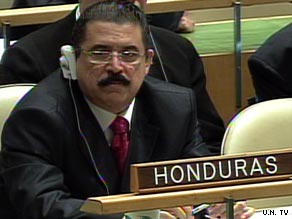
"I am going to return on Thursday because they expelled me by force, and I am going to return as always: as a citizen and as president," Zelaya said at a U.N. news conference shortly after the world body unanimously adopted a resolution that he should be restored to power.

Zelaya, speaking to the U.N. General Assembly, called the resolution historic.

"Your servant has several accusations against him in Honduras," Zelaya said. "But nobody has given me a trial. Nobody has convened a tribunal."

Meanwhile, Micheletti's provisional government said Zelaya would be arrested if he returned.

"As soon as he arrives he will be captured, as we already have the arrest warrants ready," new Foreign Minister Enrique Ortez Colindres told CNN en Español.

Zelaya would face charges of violating the constitution, corruption and drug trafficking, among others, Ortez said.

The deposed president said he would travel to Washington to attend a meeting of the Organization of American States. He also is expected to meet Tuesday evening with Tom Shannon, the top U.S. official on Latin America.

Even as Zelaya spoke at the United Nations, his opponents held a large and noisy rally in Tegucigalpa, the capital of Honduras. Crowd members waved blue and white Honduran flags and signs denouncing Zelaya.

Roberto Micheletti, the new provisional president, briefly addressed the crowd Tuesday afternoon. He vowed that the next national elections, slated for November, will be held as planned, and that a new president will be sworn in as usual in January.

Gen. Romeo Vasquez Velasquez, the top Honduran military commander who had butted heads with Zelaya, also spoke at the rally. By removing Zelaya, the armed forces were only complying with their constitutional duties, he said.

Before he spoke, the crowd chanted in support, "Armed forces! Armed forces!"

Zelaya supporters also were active Tuesday, with three major public-sector labor unions launching a general strike, a union official told CNN. About 100,000 workers joined the strike, said Oscar Garcia, vice president of the Honduran water workers union SANAA. That number could not be independently verified.

"It will be an indefinite strike," Garcia said. "We don't recognize this new government imposed by the oligarchy, and we will mount our campaign of resistance until President Manuel Zelaya is restored to power."

Also on Tuesday, the U.S. State Department said it was reviewing its aid to Honduras as it works with regional partners on a deal to restore Zelaya to power and quell political unrest in the country.

Department spokesman Ian Kelly said the U.S. was reviewing whether Zelaya's ouster met the legal definition of a "coup" before any decision was made.

"Because of the situation and the very dramatic nature of the events there and our profound concern about what's going on there, I think we're looking at a number of aspects of our cooperation," Kelly said.

The State Department has also issued a travel alert due "to the current unstable political and security situation in Honduras." The alert "recommends that American citizens defer all nonessential travel to Honduras until further notice."

In another development, two U.S. military officials in Washington confirmed to CNN that U.S. helicopters will fly over southern Honduras on a humanitarian relief mission Tuesday. The officials said there is great sensitivity to any public appearance by the U.S. military in the country.

The U.S. military also postponed some planned exercises with the Honduran military until the situation in the country settles down, according to the U.S. Southern Command.

"We have postponed certain activities," Maj. D.L. Wright, Southern Command spokesman, told CNN.

Wright said this decision would be in effect for at least two to three weeks, or "until the political situation settles."

Zelaya was overthrown early Sunday when the Honduran military arrested him and flew him to Costa Rica. Micheletti, president of the Congress, was sworn in as provisional president later Sunday.

The United Nations, OAS and most nations in the Western Hemisphere, including the United States, have condemned the ouster and demanded that Zelaya be restored to power.

The World Bank said Tuesday it would freeze funds to Honduras until the crisis is resolved, and the United States said it is reviewing its aid to the Central American nation. The U.S. joined many other nations in co-sponsoring Tuesday's U.N. resolution.

Zelaya had been at odds with the other branches of government over a referendum he wanted to hold Sunday. The Honduran Supreme Court had ruled that the referendum was illegal, and Congress had voted not to hold it.

The high court also had overturned Zelaya's dismissal of Honduras' top general, who said the military would not participate in the referendum. The court ordered that the general be reinstated immediately.

Zelaya disregarded those actions and vowed to hold the vote anyway. Micheletti also told Honduras' representatives at the United Nations and OAS to quit speaking against the new government or they immediately will be removed from their posts. They are not authorized, he said, to speak for the Honduran government.

In another development, two U.S. military officials in Washington confirmed to CNN that American helicopters will fly over southern Honduras on a humanitarian relief mission Tuesday. The officials said there is great sensitivity to any public appearance by the U.S. military in the country.

Three Black Hawk helicopters are scheduled to leave an air base at Soto Cano in Honduras and fly south to Nicaragua. They will be used to support the USNS Comfort, which is conducting a medical relief mission.
Read More

Michael Jackson, pop music legend, dead at 50


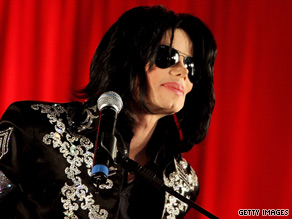
(CNN)Michael Jackson, the show-stopping singer whose best-selling albums -- including "Off the Wall," "Thriller" and "Bad" -- and electrifying stage presence made him one of the most popular artists of all time, died Thursday, CNN has confirmed.

He was 50.

He collapsed at his residence in the Holmby Hills section of Los Angeles, California, about noon Pacific time, suffering cardiac arrest, according to brother Randy Jackson. He died at UCLA Medical Center.

Lt. Fred Corral of the Los Angeles County Coroner's Office said an autopsy would probably be done on the singer Friday, with results expected that afternoon.

"Michael Jackson made culture accept a person of color," the Rev. Al Sharpton said. "To say an 'icon' would only give these young people in Harlem a fraction of what he was. He was a historic figure that people will measure music and the industry by."

Jackson's blazing rise to stardom -- and later fall from grace -- is among the most startling of show business tales. The son of a steelworker, he rose to fame as the lead singer of the Jackson 5, a band he formed with his brothers in the late 1960s. By the late '70s, as a solo artist, he was topping the charts with cuts from "Off the Wall," including "Rock With You" and "Don't Stop 'Til You Get Enough."

In 1982, he released "Thriller," an album that eventually produced seven hit singles. An appearance the next year on a Motown Records 25th-anniversary special cemented his status as the biggest star in the country.

For the rest of the 1980s, they came no bigger. "Thriller's" follow-up, 1987's "Bad," sold almost as many copies. A new Jackson album -- a new Jackson appearance -- was a pop culture event.

The pop music landscape was changing, however, opening up for rap, hip-hop and what came to be called "alternative" -- and Jackson was seen as out of step.

His next release, 1991's "Dangerous," debuted at No. 1 but "only" produced one top-ranking single -- "Black or White" -- and that song earned criticism for its inexplicably violent ending, in which Jackson was seen smashing car windows and clutching his crotch.

And then "Dangerous" was knocked out of its No. 1 spot on the album charts by Nirvana's "Nevermind," an occurrence noted for its symbolism by rock critics.

After that, more attention was paid to Jackson's private life than his music career, which faltered. A 1995 two-CD greatest hits, "HIStory," sold relatively poorly, given the huge expense of Jackson's recording contract: about 7 million copies, according to Recording Industry of America certifications.

A 2001 album of new material, "Invincible," did even worse.

In 2005, he went to trial on child-molestation charges. He was acquitted.

In July 2008, after three years away from the spotlight, Jackson announced a series of concerts at London's O2 Arena as his "curtain call." Some of the shows, initially scheduled to begin in July, were eventually postponed until 2010.

Michael Jackson was born August 29, 1958, to Joe Jackson, a Gary, Indiana, steelworker, and his wife, Katherine. By the time he was 6, he had joined his brothers in a musical group organized by his father, and by the time he was 10, the group -- the Jackson 5 -- had been signed to Motown.

He made his first television appearance at age 11.

Jackson, a natural performer, soon became the group's front man. Music critic Langdon Winner, reviewing the group's first album, "Diana Ross Presents the Jackson 5," for Rolling Stone, praised Michael's versatile singing and added, "Who is this 'Diana Ross,' anyway?"

The group's first four singles -- "I Want You Back," "ABC," "The Love You Save" and "I'll Be There" -- went to No. 1 on the Billboard pop chart, the first time any group had pulled off that feat. There was even a Jackson 5 cartoon series on ABC

In 1972, he hit No. 1 as a solo artist with the song "Ben."

The group's popularity waned as the '70s continued, and Michael eventually went solo full time. He played the Scarecrow in the 1978 movie version of "The Wiz," and released the album "Off the Wall" in 1979. Its success paved the way for "Thriller," which eventually became the best-selling album in history, with 50 million copies sold worldwide.

At that point, Michael Jackson became ubiquitous.

Seven of "Thriller's" nine cuts were released as singles; all made the Top Ten. The then-new cable channel MTV, criticized for its almost exclusively white playlist, finally started playing Jackson's videos. They aired incessantly, including a 14-minute minimovie of the title cut. ("Weird Al" Yankovic cemented his own stardom by lampooning Jackson's song "Beat It" with a letter-perfect parody video.)

On the Motown Records' 25th-anniversary special -- a May 1983 TV extravaganza with notable turns by the Temptations, the Four Tops and Smokey Robinson -- it was Michael Jackson who stopped the show.

Already he was the most popular musician in America, riding high with "Thriller." But something about his electrifying performance of "Billie Jean," complete with the patented backward dance moves, boosted his stardom to a new level. Video

People copied his Jheri-curled hair and single-gloved, zippered-jacket look. Showbiz veterans such as Fred Astaire praised his chops. He posed for photos with Ronald and Nancy Reagan at the White House. Paul McCartney teamed with him on three duets, two of which -- "The Girl Is Mine" and "Say Say Say" -- became top five hits. Jackson became a Pepsi spokesman, and when his hair caught fire while making a commercial, it was worldwide news.

It all happened very fast -- within a couple years of the Motown special. But even at the time of the "Motown 25" moonwalk, fame was old hat to Michael Jackson. He hadn't even turned 25 himself, but he'd been a star for more than half his life. He was given the nickname the "King of Pop" -- a spin on Elvis Presley's status as "the King of Rock 'n' Roll" -- and few questioned the moniker.

Relentless attention

But, as the showbiz saying has it, when you're on top of the world, there's nowhere to go but down. The relentless attention given Jackson started focusing as much on his eccentricities -- some real, some rumored -- as his music.

As the Web site Allmusic.com notes, he was rumored to sleep in a hyperbaric chamber and to have purchased the bones of John Merrick, the "Elephant Man." (Neither was true.) He did have a pet chimpanzee, Bubbles; underwent a series of increasingly drastic plastic surgeries; established an estate, Neverland, filled with zoo animals and amusement park rides; and managed to purchase the Beatles catalog from under Paul McCartney's nose, which displeased the ex-Beatle immensely.

In 1990s and 2000s, Jackson found himself pasted across the media for his short-lived marriages, the first to Elvis Presley's daughter, Lisa Marie; his 2002 claim that then Sony Records head Tommy Mottola was racist; his behavior and statements during a 2003 interview with British journalist Martin Bashir done for a documentary called "Living With Michael Jackson;" his changing physical appearance; and, above all, the accusations that he sexually molested young boys at Neverland.

The first such accusation, in 1993, resulted in a settlement to the 13-year-old accuser (rumored to be as high as $20 million), though no criminal charges were filed, Allmusic.com notes.

He also fell deeply in debt and was forced to sell some of his assets. Neverland was one of many holdings that went on the block. However, an auction of material from Neverland, scheduled for April, was called off and all items returned to Jackson.

Interest in Jackson never faded, however, even if some of it was prurient. In 2008, when he announced 10 comeback shows in London, beginning in July 2009, the story made worldwide news. The number of concerts was later increased to 50.

Seventy-five thousand tickets sold in four hours when they went on sale in March.

However, when the shows were postponed until 2010, rumors swept the Internet that Jackson was not physically prepared and possibly suffering from skin cancer.

At the time, the president and CEO of AEG Live, Randy Phillips, said, "He's as healthy as can be -- no health problems whatsoever."

Jackson held open auditions for dancers in April in Los Angeles.

He is survived by his three children, Prince Michael I, Paris and Prince Michael II.
Read More

Video of church's 'casting out' gay 'demon' in teen sparks anger


The boy writhes uncontrollably on the floor, but the church members remain calm, if increasingly loud. They're trying to drive a "demon" out of him.

"You homosexual demon, get up on outta here!" they say. "You demon, loose yourself!" "You sex demon ... you snake!"

The shouts, the convulsions, the references to homosexual spirits -- they are all captured on a video posted on YouTube by the Manifested Glory Ministries. The video has sparked anger among gay youth advocacy groups and put the small church from Bridgeport, Connecticut, in the middle of an ongoing national debate on gay issues.

Patricia McKinney, pastor of the nondenominational church who describes herself as a prophet, said she has even been receiving death threats as a result of the video, but doesn't understand the outrage.

"I believe in deliverance, I believe in anointing, I believe in the power of Jesus," she said in a phone interview with GC USA. "I've been threatened already, I've been attacked, and it doesn't make any sense to us. Really, what they're doing, they're putting me out there on the mat."

McKinney says she doesn't refer to the events of the video as an exorcism, but rather a "casting out of unclean spirits." She said this isn't the first time that an event like this has taken place at her church, but it is the first one centered around homosexuality.

McKinney said the boy approached the church and told her he wanted to be a pastor, but was struggling with his sexuality. "We allow [gay people] to come into our church. We just don't allow them to come in and continue to live that lifestyle," she said.

"God made Adam and Eve," she said. "He made a woman to be with a man, and a man to be with a woman."

Robin McHaelen, who worked with the 16-year-old boy at the center of the video in her position as executive director of True Colors Inc., a gay youth advocacy and mentoring program in Connecticut, said the video was taped in March. She would not identify the teen.

McHaelen said she doesn't think the church acted maliciously -- but that's part of her problem with the video.

"None of the people in this video were intending to hurt this kid," she said. "They performed this ritual in an attempt to rid him of feelings that he didn't want to have."

The boy is the fifth teen True Colors is aware of that has undergone an event like the one documented in the video. But unlike the boy, not all the teens approached a church or religious organization.

The event, McHaelen said, reflects a culture and society that doesn't believe a person can be both Christian and gay.

"That's what makes me so sad and so mad," she said.

McHaelen said she talked to the boy since the incident and said he's feeling very conflicted and confused in trying to reconcile who he is with his religion.

"He's 16 and having the feelings that he's having, the relationships he's having, and then [he's] being tormented by 'What if I'm going to go to hell because of what I feel and who I am?'" she said.

McHaelen notified the Connecticut Department of Children and Families, as she's mandated to do in her position when she suspects abuse or neglect of a minor. However, she told CNN the department will be looking into whether or not abuse or neglect occurred by the parents and family of the boy, not the church. The department declined to comment Thursday.

Isaiah Webster, Director of Communications for the National Youth Advocacy Commission, said he was deeply saddened by the timing of the video and the accompanying uproar.

"It's very, very sad that this still takes place in society," he said. "It's also very sad that it comes about during this week, [as the] 40th anniversary of Stonewall is this weekend."

The so-called "Stonewall Riots" are believed by many to have kicked off the gay liberation movement.

"That is really something to celebrate," Webster continued, "and it's unfortunate that young people still have to endure things like this."

McHaelen said that as an advocacy group, she doesn't think True Colors can take any legal action against the church, and said she would rather engage in an open dialogue with its members.
Read More